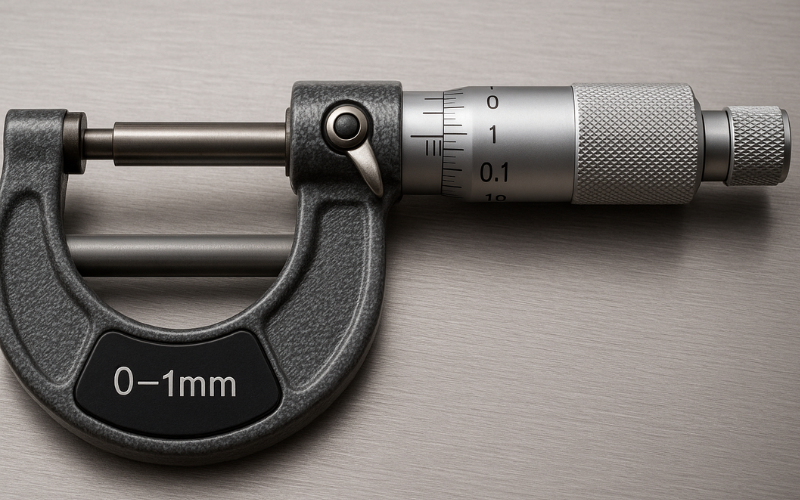
If you have ever tried to measure something tiny and realized your regular tools just don’t cut it, a micrometer is probably what you needed. A micrometer is both a unit of measurement and a handheld device used to measure very small dimensions with impressive accuracy. In mechanical engineering and manufacturing, this tool is a daily necessity because a difference of even one hundredth of a millimeter can decide whether a part fits perfectly or becomes scrap. In everyday terms that small difference is basically invisible to the eye, but engineers still care because machines rely on perfect fits.
I have used micrometers for years in machine shops, labs and production floors and I can tell you first hand this tool is not about theory. It is about making sure that a component that looks perfect actually performs perfectly. That is why micrometers are trusted for fine measurements in aerospace parts manufacturing, automotive engineering and precision machining.
Snippet-Ready Definition
A micrometer is a precision measuring tool that accurately measures very small distances or part dimensions. It uses a screw mechanism to provide reliable readings, often down to 0.01 mm or smaller.
Understanding What a Micrometer Is
A big reason people get confused is that the word micrometer refers to two things: the unit and the instrument. Let’s break both down clearly.
Micrometer as a Unit
A micrometer unit is a very small measurement equal to one millionth of a meter. To make sense of it in everyday numbers:
- 1 micrometer equals 0.001 millimeter
- 1 millimeter equals 1000 micrometers
- 1 meter equals 1,000,000 micrometers
In science and engineering this unit matters because we work with very tiny features like fibers, medical components or microelectronics. For example, the diameter of human hair can range from 17 to 181 micrometers depending on the person. Even the thickness of some paper is a few dozen micrometers. When you see such numbers, it becomes clear why precise measurement matters.
You will also see the micrometer symbol used as the Greek letter mu followed by m which looks like μm. In manufacturing drawings, this unit helps express fine tolerances such as 8 μm or 20 μm where a slight variation could affect performance.
Quick Comparison Table
Micrometer vs Vernier Caliper
| Feature | Micrometer | Vernier Caliper |
| Accuracy | Very high (up to 0.01 mm) | High (up to 0.02 mm) |
| Best For | Small objects requiring precision | Versatile general measurements |
| Speed | Slower | Faster |
| Range | Limited | Wider |
| Ideal User | Precision machinists | Beginners and general use |
Micrometer as a Measuring Instrument
The micrometer device also goes by names like micrometer screw gauge or simply micrometer gauge. It is a handheld tool that measures external, internal or depth dimensions depending on the version you use. Unlike a ruler or vernier caliper, a micrometer relies on a very finely machined screw thread that converts rotational motion into linear displacement. Because that screw moves so little with each turn the tool can measure tiny distances very accurately.
The interesting thing is that many beginners think this tool is overkill until they see how often tiny measurement errors cause functional issues. When you deal with engine parts shafts precision tools or quality control checks a micrometer quickly becomes your best friend.
Parts of a Micrometer and What They Do
Even though micrometers come in different designs most share the same essential components. If you understand these parts you will understand how the tool works.
The main frame is the C shaped body that supports everything. On one side you have the anvil and on the other the spindle. These are the two faces that make contact with the part you are measuring. The spindle moves forward and backward while the anvil remains fixed.
The barrel or sleeve is the stationary scale engraved with fixed markings. The thimble is the rotating part with fine markings that represent fractions of a millimeter. Inside these parts is a precision screw that allows the spindle to move forward with every rotation. This is the heart of the micrometer. If the screw is manufactured poorly the instrument will always produce inaccurate readings.
Most micrometers include a ratchet stop or friction thimble at the end. This ensures consistent measuring pressure. Without it you might tighten too much and deform soft parts which throws off measurements. There is also a lock nut that freezes the spindle so you can record readings accurately.
How a Micrometer Works and How to Read It
Here’s the thing. Most people get intimidated by micrometers because they think reading them requires advanced math. It does not. Once you understand the basic logic it becomes second nature.
The working principle is simple. A finely threaded screw moves the spindle forward a tiny amount for each rotation. Because that movement is predictable and consistent the scale on the sleeve and thimble allow you to measure extremely small distances with high accuracy.
To read a micrometer you generally start with the barrel scale which shows whole and half millimeter markings. Then you check the thimble which displays fractional values. Combine both and you get the final measurement. Many micrometers have a vernier scale that allows even finer readings but not all models include it.
A simple example. If the barrel reads 5.5 mm and the thimble reads 28 that translates to 5.5 plus 0.28 giving you 5.78 mm. Once you get a feel for it you can read a micrometer in seconds.
One important habit is to perform a zero check before use. If the faces do not align at zero the instrument needs adjustment. Skipping this step is one of the most common mistakes I see beginners make.
Types of Micrometers and When They Are Used
Micrometers are not one size fits all. Different designs exist for different measurement problems. The most common type is the outside micrometer used for measuring outside diameters thicknesses or widths of small parts. This is the one you see in most machining shops.
Inside micrometers measure internal dimensions like holes and bore diameters. Depth micrometers are used when you need to measure recesses slots or grooves. Apart from these there are specialty designs like blade micrometers used for narrow spaces and pitch diameter micrometers used for screw threads.
Another big question people ask is whether they should choose digital or analog micrometers. Digital versions give direct readings and reduce reading errors so they are great in busy environments. Analog versions give a better sense of measurement feel and don’t rely on batteries but require more skill.
Practical Uses of Micrometers in Engineering
In manufacturing micrometers are used constantly to verify that dimensions match the required tolerance. Tolerance is simply the acceptable variation from a target dimension. In industries like aerospace or automotive tolerance could be just a few micrometers.
Let’s say you are machining a shaft that is supposed to be 10.00 mm. If the tolerance is plus or minus 0.01 mm you have almost no room for error. A caliper might say it is correct but a micrometer will tell you if it is truly correct.
You will also see micrometers in quality control departments. Inspectors use them to measure samples from production batches to ensure consistency. A small deviation caught early can prevent thousands of bad parts.
Micrometers are used in labs as well for scientific work where microscopic accuracy matters. In optics electronics and materials testing the margin for error can be extremely small which makes measurement accuracy critical.
Micrometer vs Vernier Caliper
Many beginners start with a caliper because it is more versatile. A caliper can measure inside outside and depth dimensions. It also has a larger measurement range. The tradeoff is accuracy. A micrometer has a smaller range but significantly higher precision.
A caliper is great for quick checks or larger dimensions. A micrometer is better when you need accuracy down to small fractions of a millimeter. In real practice you don’t choose one over the other. You choose whichever instrument suits the job.
Understanding Least Count and Why It Matters
Least count is simply the smallest measurement the instrument can reliably detect. For most micrometers this is 0.01 mm though high precision models go smaller. Least count matters because it tells you how sensitive the measurement is.
Accuracy is not just about reading numbers. It depends on the screw quality calibration and the user’s skill. Even environmental temperature plays a role because metals expand slightly when heated. That tiny expansion can be enough to ruin a measurement at the micrometer level.
Tips and Common Mistakes to Avoid
Here are a few practical tips that make a huge difference when using a micrometer.
- Clean the surfaces before measuring. Dirt can add a few micrometers which ruins accuracy.
- Use consistent force. That’s why the ratchet exists. Don’t crank the tool like a wrench.
- Zero check regularly especially if someone else was using it before you.
- Choose the right type. Forcing an outside micrometer to measure a groove is pointless.
- Store it properly. A micrometer is a precision tool not a hammer.
I once worked in a shop where new machinists kept scrapping parts because they tightened too hard and squeezed brass components thinner than they actually were. They blamed the tool. The problem was technique.
When a Micrometer Is the Best Choice and When It Isn’t
Micrometers shine when you need precise external measurements of small components. They are fantastic for shafts pins washers metal plates and any parts that rely on tight tolerances. They are less practical for large objects or parts that require multiple measurement types because they are slower to operate.
If you need versatility speed or moderate accuracy use a caliper. If you need precision a micrometer is the better choice.
Advanced Applications in Modern Manufacturing
Modern industries rely heavily on micrometer level precision. In aerospace parts often require tolerances under 10 micrometers. In automotive production a small dimensional drift can cause vibration noise or premature failure.
In advanced production environments digital micrometers connect to computers and inspection systems. They record data automatically which makes statistical quality control faster and more reliable. This is common in high volume automated manufacturing.
Temperature control also matters in precision labs. For example dimensional calibration is often performed at 20 degrees Celsius because metal expansion can change measurement accuracy.
Real World Benefits of Using Micrometers Correctly
The best part about using micrometers properly is that they help you produce parts that simply work better. Good measurements reduce waste improve machine performance and make assembly smoother. When you are producing parts in high volume a fraction of a millimeter can separate a profitable batch from a costly failure.
Experienced machinists also know that accurate measurement builds trust. If customers believe your shop produces reliable parts you get more work and fewer complaints.
User Friendly Tips for Beginners
If you are new to micrometers don’t feel overwhelmed. Start slow keep a notebook and practice on sample parts. Develop a sense of touch with the ratchet. It will help more than you expect.
Focus on stability. Measuring with shaky hands always causes errors. Support your hands or rest the tool on a bench while turning the thimble.
Conclusion
A micrometer may look like a simple measuring tool but it plays a major role in modern engineering. It helps us measure tiny dimensions accurately which ensures better performance reliability and safety. Whether you are machining a part testing a component or studying materials the micrometer is a reliable companion. It rewards patience and skill and shows you quickly if your work is truly accurate.
The more you use it the more you realize how much precision matters. Good measurement is not just about numbers. It is about understanding how that measurement affects design function and quality in the real world.
FAQs
Q1: What is a micrometer used for?
A micrometer is used to measure very small distances or dimensions with high accuracy, usually in engineering, machining, quality control, and scientific applications.
Q2: What is the least count of a micrometer?
Most micrometers have a least count of 0.01 mm, though more advanced models can measure even smaller increments.
Q3: How accurate is a micrometer compared to a vernier caliper?
A micrometer is generally more accurate but has a smaller measurement range. A caliper is more versatile but slightly less precise.
Q4: Can beginners use a micrometer easily?
Yes, but it takes practice. Once you understand how to read the scales and apply consistent force, it becomes very easy.
Q5: What is the difference between a digital and analog micrometer?
Digital micrometers display readings automatically and reduce user errors, while analog micrometers offer manual reading and better measurement feel.
Disclaimer
This content is provided for educational purposes. Measurement techniques and tool tolerances may vary based on brand, condition, and environment. Always refer to manufacturer guidelines and professional standards for precise calibration or engineering applications.
