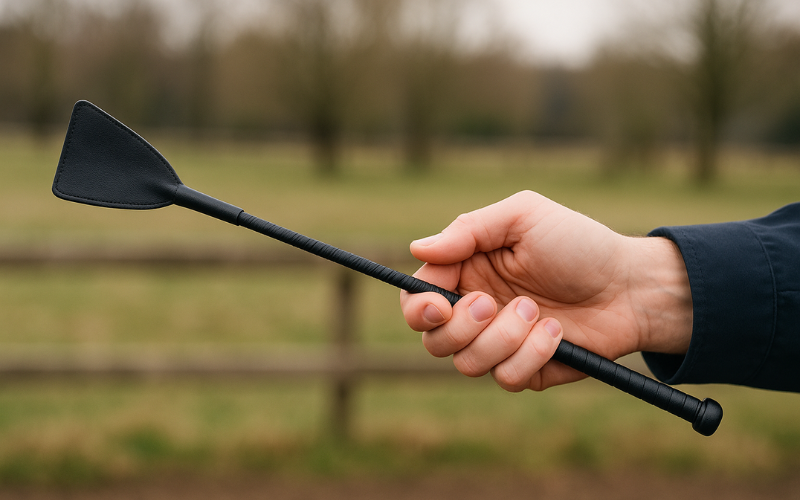
If you have ever watched someone ride a horse and noticed them holding a short stick with a flap at the end, that was a riding crop. New riders often think of it as a punishment tool, but here’s the thing, a crop is not designed to hurt the horse or scare them. It is simply a way to reinforce a cue when the horse is not responding to your leg or seat. When used correctly, it helps communication, not control.
From years of training riders, I’ve seen how confusing this tool can be in the beginning. Riders have questions like do riding crops hurt horses or what happens if I hit too hard or is it cruel. So let’s walk through what a riding crop is, how it works, and how to use it responsibly so your horse understands you clearly and trusts you along the way.
Snippet-Ready Definition
A riding crop is a short tool used in horse riding to reinforce cues, improve communication, and encourage responsiveness. It delivers a light tap, not pain, when used correctly.
What Is a Riding Crop
A riding crop is a short stick used in horse riding to reinforce your natural aids. It is not meant to replace leg or seat cues, but to back them up when your horse ignores them. Think of it as a way to say hey buddy, I really meant that.
Most crops are around two feet long, flexible, and have a flap or popper at the end. That popper makes a tapping sound when you use it which is sometimes enough to get the horse to listen without any contact at all.
A lot of riders get nervous holding a crop because they associate it with punishment. But trust me, when you use it correctly, your horse will understand it as information, not aggression.
Quick Comparison Table: Riding Crop vs Whip
| Feature | Riding Crop | Whip |
| Length | Short | Longer |
| Control | High | Moderate |
| Use | Reinforce cues | Reach from a distance |
| Force | Mild tap | Can be stronger |
| Best For | Jumping, general riding | Dressage, lunging |
Anatomy of a Riding Crop
Let me break down the basic parts in simple terms.
- A handle that helps you grip it without slipping
- A shaft which gives structure and flexibility
- A wrist strap for security
- A popper or keeper that contacts the horse
The popper may look tiny, but it plays a big role. It spreads the pressure across a wider area which is why a crop feels more like a tap instead of a sting. Some crops are stiff, some flexible and the feel matters because you want something lightweight that responds easily to your wrist.
I always tell riders to choose a crop that feels balanced in their hand. If it feels clumsy, you will probably use it incorrectly.
Riding Crop vs Whip
People often mix up the words riding crop, whip and horse whip. They are not the same thing. Here’s a quick breakdown.
- Crops are shorter, used for close range communication
- Whips are longer and can reach without bending your body
- Jumping bats are short and broad for quick taps during jumping
- Dressage whips are long and thin to reach behind your leg gently
So in simple terms:
A crop is compact, controlled and used for quick, targeted reinforcement.
A whip is designed to reach further without you moving your hands or changing your posture. Riders in different disciplines choose differently based on what they need. For example, a show jumper may rely on a jumping bat because it is fast and easy to use over fences.
How a Riding Crop Is Used in Horse Riding
When you ask a horse to move forward with your leg and they ignore it, you can add a light tap with the crop behind your leg. This tells the horse that you are serious about the cue. The timing matters far more than the strength. If you wait three seconds, the horse will not understand what the tap relates to.
A lot of beginners tap too hard because they panic. The secret is a light wrist flick. The crop is supposed to feel annoying, not painful. If it hurts, you will probably shut the horse down or trigger a defensive reaction.
I’ve worked with lazy horses, anxious horses, stubborn horses and green horses. In most cases, the crop helps them understand what you want faster because it gives a clear signal without yelling with your leg every stride.
Rules, Standards and Welfare Guidelines
Most equestrian organizations have strict rules about crop use. These rules exist to protect horses from abuse and unfair treatment. For example, in many competitions you can only tap a horse a certain number of times and only in specific areas of the body.
Striking the horse on the head, flank or belly is usually disallowed. Excessive force is penalized. Judges are trained to spot misuse and riders can be disqualified.
The point is simple. The crop is allowed as long as it is used thoughtfully, not emotionally. The moment a rider becomes frustrated, they should put the crop down.
Safe and Ethical Use
Here are a few things I coach new riders on.
- Do not use a crop first, use your leg first
- Tap as a reminder, not a punishment
- Keep your wrist soft, not stiff
- Do not swing your arm, it creates too much force
If your horse bolts, bucks or bites when tapped, stop immediately. That reaction is fear based and you won’t fix it with pressure. Horses with trauma history sometimes associate the crop with pain and need slow, patient retraining.
Do Riding Crops Hurt Horses
This is a common fear riders have. The honest answer is, a crop can hurt a horse if used incorrectly. But when used properly, it feels like a quick tap, not a hit. Horses have thicker skin than humans, but they are extremely sensitive to pressure, movement and sound.
Sometimes a horse responds just to the sound of the popper snapping through the air. That’s why a lot of trainers will flick the air behind the horse before actually tapping.
If your horse has riding crop marks on its skin, you’re hitting too hard or too often. That is never acceptable in training.
Buying Guide for Riding Crops
Choosing the right crop is more important than most beginners realize. These are the basics to consider.
- Grip: comfortable, non slippery
- Weight: light enough to control easily
- Flexibility: moderate, not rigid
- Length: around two feet for general use
- Popper size: small for precision, larger for jumping
If you shop online, like on Amazon, avoid the cheapest options that look like novelty toys. They often break, have poor balance, or feel uncomfortable in the hand which leads to sloppy technique.
Care, Maintenance and When to Replace
A crop needs occasional care. Dirt, sweat and moisture can damage the material especially if it has leather parts. Wipe it down after rides and do not leave it in a humid tack room.
Replace your crop when it:
- Frays or cracks
- Becomes too soft or stiff
- Loses the popper
- Has a loose handle
A worn crop can be unpredictable and unsafe.
Alternatives to Using a Riding Crop
Sometimes, riders rely too heavily on artificial aids. If your horse responds poorly, it might not be laziness, it might be confusion, pain or poor training.
Alternatives include:
- Clear leg aids
- Voice commands
- Body weight cues
- Positive reinforcement
Some horses become more responsive with less pressure, not more.
Psychology Behind Using Riding Aids
Horses learn through pressure and release. When you apply pressure and they respond correctly, you release pressure immediately. This teaches them the right answer.
The biggest mistake I see new riders make is holding pressure for too long. Horses don’t learn from constant pressure, they learn from the moment pressure disappears.
Riding Crop in Human Contexts
People sometimes search for riding crops for couples or BDSM activities. The crop was designed for equestrian use but some adults adapt it for impact play. If someone chooses to use a riding crop with another person, safety and consent are non negotiable.
Human skin is far more delicate than horse skin. Even a light tap can sting or leave marks. Communication, safe words and hygiene matter. Never strike sensitive areas like the face or joints and avoid using the same crop for a horse and a person.
Expert Tips for Beginners
Here are three tips I give every new rider.
- If your horse ignores you, improve your leg, not your crop
- Praise the horse immediately when they respond
- A crop is a teaching tool, not a punishment tool
If a horse does not respond after a tap, hitting harder rarely fixes the problem. Solve the reason behind the disobedience.
Conclusion
A riding crop is a useful tool when it helps a horse understand your cues more clearly. It should never be used in anger, frustration or fear. Horses learn through clarity and consistency, not force.
The best part is, when you use a crop correctly, you often hardly need it at all. A responsive horse listens to light pressure, soft cues and confident leadership. Focus on building trust first and you’ll get better results than you ever will from chasing obedience.
FAQs
Q1: Do riding crops hurt horses
Not when used correctly. A crop should feel like a quick tap, not a painful hit.
Q2: Can a riding crop leave marks
If used harshly, yes. Marks indicate misuse and poor technique.
Q3: Riding crop vs whip which is better
A crop is better for controlled, close-range cues. A whip is used for longer reach.
Q4: What is a riding crop used for humans
Some adults use it in consensual intimacy. If so, communication and safety are essential.
Disclaimer
This article is for educational purposes only. Riding crops should always be used responsibly, with proper training and consideration for animal welfare. Misuse of a crop can harm horses or people. Always follow local laws, competition rules, and professional guidance before using one. If you are new to riding, seek instruction from a qualified trainer.
